
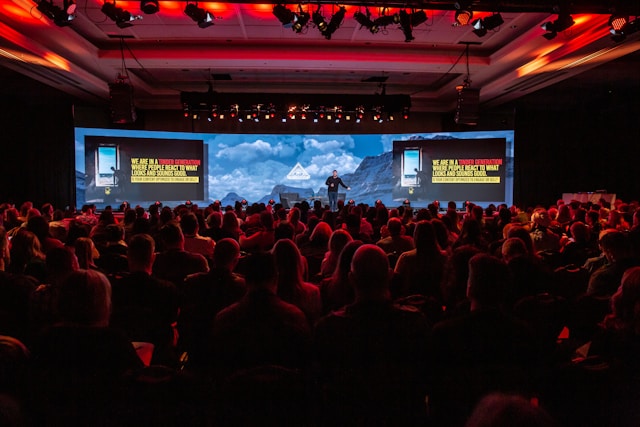
Quick answer: Interactive performers outshine traditional event acts because they actively involve guests rather than asking them to watch passively. This boosts engagement, creates memorable shared experiences, sparks networking, and delivers stronger returns on your event budget. For corporate events focused on connection and brand impact, interactive entertainment is the smarter choice.
Planning a corporate event comes with a long list of decisions, but few shape the experience as much as the entertainment you choose. The right act can turn a forgettable evening into the highlight of the year. The wrong one can leave guests checking their phones and counting down to the exit.
For decades, the default option was a traditional act—a band in the corner, a magician on stage, a comedian working through a set. These performances have their place. But the way people experience events has changed. Attendees no longer want to sit back and watch from a distance. They want to take part, connect with colleagues, and walk away with a story worth telling.
That shift explains the rise of interactive performers. Instead of putting on a show for a passive audience, these entertainers pull guests into the action. This post breaks down what interactive entertainment actually means, why it consistently outperforms traditional acts, and how to choose the right option for your next corporate event.
What is interactive corporate entertainment?
Interactive corporate entertainment is any act that directly involves guests in the performance rather than asking them to simply watch. The audience becomes part of the experience, shaping how it unfolds.
Traditional acts follow a one-way model. A performer delivers, the audience receives. Think of a jazz trio playing through dinner or a speaker presenting from a podium. There’s a clear line between the stage and the seats.
Interactive entertainment erases that line. Common examples include:
- Roaming magicians who perform close-up tricks at individual tables
- Caricature artists who sketch guests on the spot
- Improv comedy troupes who build sketches from audience suggestions
- Silent discos where guests choose their own soundtrack
- Interactive game shows that pit teams of colleagues against each other
- Mixology or cooking classes led by a charismatic host
- Mentalists who weave guests directly into their routines
The common thread is participation. Guests aren’t spectators—they’re collaborators in the entertainment itself.
Why do interactive performers outshine traditional acts?
Interactive performers consistently deliver better results at corporate events because they solve the biggest problem traditional acts face: keeping a busy, distracted audience genuinely engaged. Here’s how they do it.
They turn passive guests into active participants
A traditional act competes with everything else in the room—conversations, drinks, phones, and the natural urge to mingle. When a performance only asks people to watch, attention drifts fast.
Interactive performers flip that dynamic. By inviting guests into the action, they remove the option to tune out. A roaming magician at your table isn’t background noise—you’re part of the trick. This active involvement holds attention in a way passive shows rarely manage.
They create memories that stick
People remember what they do far more than what they see. A guest who watched a great band might recall that the music was good. A guest who got pulled into an improv sketch or won an interactive game show will retell that story for weeks.
Shared experiences also bond people. When colleagues laugh together at a caricature or team up to beat another department in a trivia challenge, they build connections that outlast the event itself. That’s exactly the outcome most corporate gatherings are trying to achieve.
They spark networking and break the ice
One of the hardest parts of any corporate event is getting people to mix, especially across teams or seniority levels. Interactive entertainment does that work naturally.
A group activity gives strangers an easy reason to talk. Instead of forcing small talk, guests bond over a shared challenge or a funny moment. Entertainment becomes a social lubricant, easing the awkwardness that often hangs over networking events.
They adapt to the room in real time
A skilled interactive performer reads the energy of a crowd and adjusts on the fly. If a group is reserved, they ease in gently. If the room is lively, they raise the stakes. This flexibility means the experience fits the audience, not the other way around.
Traditional acts run a fixed set regardless of how the room responds. That rigidity can leave a performance feeling disconnected from the actual mood of the event.
They deliver stronger value for your budget
Event budgets demand justification. Interactive entertainment tends to deliver more measurable impact—higher engagement, stronger word of mouth, and a clearer link to event goals like team bonding or brand awareness.
A passive act might fill time. An interactive one actively works toward your objectives, which makes it easier to defend the spend when reviewing the event afterward.
When do traditional acts still make sense?
Traditional acts aren’t obsolete, and pretending otherwise would be a mistake. They remain the right choice in specific situations.
Choose a traditional act if atmosphere matters more than participation. A live band or solo pianist sets a tone beautifully during a formal dinner or a cocktail reception where guests want to talk among themselves. In these moments, entertainment in the background is exactly what you want.
Traditional acts also suit events with a fixed agenda and limited time. If your schedule is packed with speeches and awards, a short, polished performance can punctuate the evening without demanding guest involvement.
The key is matching the act to the goal. If your event is about connection and energy, lean interactive. If it’s about ambiance and a refined mood, a traditional act may serve you better.
How do you choose the right interactive performer?
Picking the right act comes down to matching the entertainment to your audience, your venue, and your goals. Use these criteria to guide the decision.
Know your audience
Consider the personality of your crowd. A young, energetic team will likely embrace bold, high-participation acts. A more reserved or senior group may prefer subtler interaction, like a roaming magician rather than a stage that demands volunteers.
Match the format to your venue
A silent disco needs space to move. A caricature artist needs a quiet corner and good lighting. Before booking, confirm that your venue supports the logistics of the act you have in mind.
Define your goal
Be clear about what you want the entertainment to achieve. If the goal is team bonding, an interactive game show works well. If it’s a relaxed celebration, roaming performers who move between groups keep the energy flowing without pressure.
Check experience and reviews
Look for performers with a track record at corporate events specifically. Corporate crowds differ from wedding or private-party audiences, and an experienced act will know how to read a professional room. Ask for references or testimonials before you commit.
Plan the timing
Decide where the entertainment fits in your run sheet. Roaming acts work well during arrivals and dinner. A headline interactive show often lands best after the meal, when guests are relaxed and ready to engage.
Making the right call for your next event
Corporate entertainment has moved well beyond putting on a show and hoping the crowd enjoys it. Today’s most successful events treat entertainment as a tool—one that drives engagement, builds connections, and reinforces the purpose behind the gathering.
Interactive performers excel at that job. They turn passive guests into active participants, create stories people retell long after the night ends, and break down the social barriers that hold so many corporate events back. Traditional acts still have their place for setting a mood, but when your goal is energy and connection, interactive entertainment wins.
Before you book your next act, start with your objective. Define what you want guests to feel and do, then choose entertainment that delivers it. Reach out to a few experienced interactive performers, ask how they tailor their act to corporate audiences, and pick the one whose approach fits your crowd.
Frequently asked questions
How much does interactive corporate entertainment cost?
Costs vary widely based on the type of act, its duration, and the performer’s experience. Roaming acts like magicians or caricature artists tend to sit at the more affordable end, while large-scale interactive game shows or multi-performer setups cost more. Always request a detailed quote that covers travel, setup, and the length of the performance.
Are interactive performers suitable for large corporate events?
Yes. Many interactive acts scale well for large audiences. Roaming performers can circulate through hundreds of guests, while interactive game shows and silent discos are built to handle big crowds. For very large events, you may book multiple performers to ensure every guest gets a chance to take part.
Will interactive entertainment make shy guests uncomfortable?
A skilled interactive performer reads the room and never forces participation. They offer easy, low-pressure ways for guests to join in, so reserved attendees can engage at their own comfort level. If you’re worried, choose subtler formats like roaming close-up magic over acts that call volunteers to a stage.
How far in advance should I book a performer?
For popular acts and peak seasons like the end-of-year holiday period, book three to six months ahead. Less in-demand acts may be available with shorter notice, but booking early gives you the widest choice and the best chance of securing your first pick.
What’s the difference between interactive and immersive entertainment?
Interactive entertainment invites guests to participate in a performance, such as suggesting ideas for an improv sketch. Immersive entertainment surrounds guests in a themed environment or story they explore. The two often overlap, and some events combine both for maximum impact.