
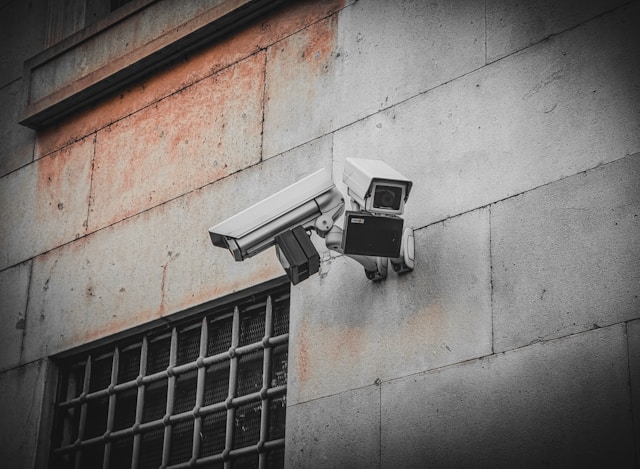
TL;DR: Modern commercial CCTV systems go far beyond basic surveillance. Today’s solutions include AI-powered analytics, cloud storage, remote monitoring, and access control integration—giving businesses the tools to deter theft, protect employees, reduce liability, and make smarter operational decisions.
Security footage used to mean grainy black-and-white images that were barely usable in court. Fast forward to today, and commercial CCTV has become one of the most powerful and versatile tools a business can invest in.
Whether you manage a single retail store or a multi-site enterprise, the right CCTV system does more than record what happens on your premises. It deters criminal activity before it starts, provides legal protection when disputes arise, and—thanks to advances in AI—can even surface insights that help you run a more efficient operation.
The challenge? The market is flooded with options. Fixed cameras, PTZ systems, thermal imaging, cloud-based platforms, and AI-powered analytics all compete for your budget and attention. Knowing which solutions actually deliver value for your specific business is the hard part.
This guide breaks down the most important commercial CCTV solutions available today, explains how they work, and helps you decide which combination makes the most sense for your business.
Why Do Modern Businesses Need Commercial-Grade CCTV Systems?
There’s a common misconception that basic consumer cameras are “good enough” for small businesses. They rarely are. Commercial CCTV systems are built to a different standard—designed for continuous 24/7 operation, wider coverage areas, higher image resolution, and integration with other security infrastructure.
The stakes are real. According to the National Retail Federation, inventory shrinkage cost U.S. retailers over $112 billion in 2022, with external theft and internal employee theft accounting for the majority of losses. Meanwhile, workplace incidents, slip-and-fall claims, and vandalism create additional legal and financial exposure that businesses of all sizes face every year.
A well-designed commercial CCTV system addresses all of these risks simultaneously. It creates a visible deterrent, documents incidents with admissible-quality footage, and gives management the visibility needed to respond quickly when something goes wrong.
What Are the Main Types of Commercial CCTV Cameras?
Choosing the right camera type is the foundation of any effective security system. Each format has distinct strengths depending on your environment and coverage requirements.
Fixed Dome Cameras
Dome cameras are the most commonly deployed camera type in commercial settings. Mounted flush to ceilings or walls, dome cameras offer a discreet profile that blends into most interiors. Because the lens direction is hidden inside the dome housing, it’s difficult for potential intruders to tell exactly where the camera is pointing—a subtle but effective deterrent.
Dome cameras work best in retail environments, lobbies, offices, and corridors where consistent, wide-angle coverage is required.
PTZ (Pan-Tilt-Zoom) Cameras
PTZ cameras give security teams active control over their viewing angle. Operators can pan across wide areas, tilt the camera to follow movement, and zoom in on specific details—all in real time. Many modern PTZ cameras also include auto-tracking capabilities, allowing them to follow a moving subject automatically without manual input.
PTZ cameras are particularly valuable in large open spaces like warehouses, parking lots, and manufacturing facilities, where fixed cameras alone can’t cover every angle effectively.
Bullet Cameras
Long-range and highly visible, bullet cameras are designed for outdoor perimeter monitoring. Their cylindrical housing typically includes built-in weatherproofing and IR night vision, making them well-suited for monitoring entry points, loading docks, and building exteriors.
The visible profile of a bullet camera also serves a deterrent function—potential intruders can easily spot them, which can be enough to discourage opportunistic crime.
360-Degree Fisheye Cameras
A single fisheye camera can capture an entire room in one shot, eliminating blind spots without requiring multiple units. This makes them a cost-efficient option for open-plan offices, showroom floors, and smaller retail spaces. The trade-off is some image distortion at the edges, which can make precise identification more difficult without digital dewarping software.
Thermal Imaging Cameras
Thermal cameras detect heat signatures rather than visible light, making them effective in complete darkness and challenging weather conditions. These cameras are typically reserved for high-security perimeters—data centers, critical infrastructure, and sites with significant physical assets to protect.
How Does AI-Powered CCTV Change Commercial Security?
Artificial intelligence has fundamentally changed what commercial CCTV systems can do. Traditional systems record footage passively and rely on human operators to review it after an incident. AI-powered CCTV systems analyze footage in real time, flagging anomalies and triggering alerts before a situation escalates.
Real-Time Threat Detection
Modern AI analytics can distinguish between a person walking through a restricted area and a vehicle passing by on an adjacent road. Systems can be configured to send instant alerts when specific behaviors are detected—loitering near entry points, perimeter breaches after hours, or objects left unattended in high-traffic areas. This kind of proactive monitoring significantly reduces the time between an incident occurring and security personnel responding.
Facial Recognition and Access Control Integration
Some enterprise-level systems now integrate facial recognition technology directly with access control infrastructure. Authorized personnel can move through secured areas without physical credentials, while the system automatically flags and alerts on unrecognized individuals. This is increasingly common in financial services, healthcare facilities, and data centers.
It’s worth noting that facial recognition technology is subject to varying legal frameworks depending on your jurisdiction. Consulting a legal professional before deployment is strongly recommended.
Crowd and Occupancy Analytics
Retail businesses and hospitality venues are using AI-powered CCTV to track foot traffic patterns, measure dwell time in specific zones, and monitor real-time occupancy levels. These insights have direct operational value—helping managers optimize floor layouts, staff scheduling, and product placements based on actual customer behavior rather than guesswork.
What Are the Best CCTV Storage Options for Commercial Businesses?
Footage is only valuable if it’s accessible and intact when you need it. Commercial CCTV systems typically offer three primary storage approaches, each with different implications for cost, reliability, and accessibility.
On-Site Network Video Recorders (NVRs)
NVRs store footage locally on a dedicated device connected to your camera network. On-site storage offers fast access to footage and keeps data within your physical control. The downside is vulnerability—if the NVR is damaged, stolen, or destroyed in the same incident that prompted the review, the footage may be unrecoverable.
Cloud-Based Storage
Cloud storage sends footage off-site automatically, protecting recordings from physical damage or tampering. Many commercial cloud CCTV platforms allow authorized users to access footage from any device with an internet connection, which is particularly useful for multi-site businesses or managers who travel frequently.
Cloud storage typically operates on a subscription model, with costs scaling based on the number of cameras and the retention period required.
Hybrid Storage Solutions
Hybrid systems combine local NVR storage with automatic cloud backup. This approach provides the speed and reliability of on-site storage while ensuring a secondary copy of critical footage is always preserved remotely. For most mid-to-large commercial operations, a hybrid approach offers the best balance of cost, redundancy, and accessibility.
Which Commercial CCTV System Is Right for Your Business?
The right system depends on four key factors: your premises layout, your industry, your risk profile, and your budget.
Small retail businesses typically benefit most from a combination of dome cameras at entry and exit points, a fixed camera covering the point-of-sale area, and cloud storage with at least 30 days of retention.
Warehouses and logistics facilities require broader coverage and are well-served by PTZ cameras and bullet cameras along the perimeter, often paired with AI-powered motion detection to monitor large areas with minimal staff oversight.
Office buildings and corporate campuses often integrate CCTV with access control and visitor management systems. Dome cameras in common areas, combined with PTZ coverage of parking facilities, provide comprehensive coverage without creating an oppressive monitoring environment.
High-security environments—such as data centers, pharmaceutical facilities, and financial institutions—typically require thermal imaging for perimeter monitoring, facial recognition integration, and redundant storage with encrypted cloud backup.
If budget is a primary constraint, prioritize high-resolution cameras at your most vulnerable points (entry and exit, cash handling areas, storage rooms) before expanding coverage. A strategically placed small system outperforms a poorly designed large one every time.
What Are the Key Compliance and Privacy Considerations for Commercial CCTV?
Installing a commercial CCTV system creates legal responsibilities alongside the security benefits. In the United States, surveillance laws vary by state and can affect where cameras can be placed, how footage must be stored, and whether employees and customers must be notified.
At a federal level, businesses operating in healthcare (HIPAA) and financial services (GLBA) have specific requirements around data security that extend to surveillance footage. In the European Union, commercial CCTV security systems fall under GDPR, requiring documented justification for surveillance, visible signage, defined retention periods, and data access protocols.
As a general rule: always display visible signage informing people they are in a monitored area, store footage securely with access controls in place, and establish a clear data retention policy that deletes footage after a defined period unless it’s required for an active investigation.
Frequently Asked Questions About Commercial CCTV Systems
How much does a commercial CCTV system cost?
Costs vary widely based on the number of cameras, storage type, and whether professional installation is included. A basic small-business system with four to eight cameras typically ranges from $1,500 to $5,000 installed. Enterprise-grade systems with AI analytics and cloud storage can run into tens of thousands of dollars annually.
How long should commercial CCTV footage be retained?
Most businesses retain footage for 30 to 90 days. High-security environments or businesses with specific compliance requirements may need longer retention periods. Check your local regulations and industry-specific guidelines before setting a retention policy.
Can commercial CCTV cameras work at night?
Yes. Most commercial-grade cameras include infrared (IR) night vision or low-light sensors capable of capturing clear footage in complete darkness. Thermal imaging cameras are also an option for environments where standard night vision is insufficient.
What is the difference between NVR and DVR systems?
NVR (Network Video Recorder) systems work with IP cameras and transmit footage over a network connection. DVR (Digital Video Recorder) systems work with analog cameras and require a direct cable connection. NVR systems generally offer higher image quality and greater flexibility, and are now the standard choice for most new commercial installations.
Do employees need to be informed about CCTV monitoring?
In most jurisdictions, yes. Employers are generally required to inform employees that surveillance is in place, particularly in workplaces. Hidden cameras are subject to strict legal limitations and are prohibited in areas where employees have a reasonable expectation of privacy, such as restrooms and changing rooms.
Building a Security Strategy That Grows With Your Business
Commercial CCTV is no longer a passive recording tool. The best systems today actively protect your assets, inform your operations, and provide the documentation you need when incidents occur.
The key is building a system that matches your current needs while leaving room to scale. Start with high-resolution cameras at your most critical points, choose a storage solution that provides redundancy, and consider AI-powered analytics if your operation is large enough to benefit from real-time monitoring.
Security technology will keep evolving—but the fundamentals won’t change. Clear footage, reliable storage, and strategic camera placement will always be the foundation of an effective commercial CCTV system. Getting those right is the most important investment you can make.