
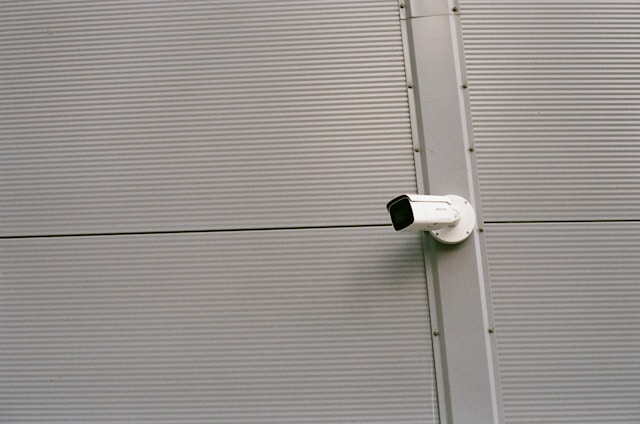
TL;DR: Commercial CCTV security has evolved from a reactive deterrent into a proactive business tool. Modern systems reduce theft, lower liability exposure, improve employee safety, and generate data that supports smarter operations—making them a practical investment for businesses of every size and industry.
Security used to be straightforward. Lock the doors, hire a guard, and hope for the best. That approach has aged poorly.
Commercial crime is more sophisticated now. Organized retail theft has surged across the US, insider threats cost businesses billions each year, and liability claims can emerge from incidents that happened weeks ago and were never properly documented. Meanwhile, the tools available to business owners have advanced dramatically—and nowhere is that clearer than in commercial CCTV security.
Today’s surveillance systems do far more than record footage. They integrate with access control, trigger real-time alerts, support remote monitoring from any device, and generate data that facility managers actually use. For businesses that haven’t revisited their security infrastructure in the last few years, what’s available now might be surprising—and the cost of not having it might be even more so.
This post breaks down why commercial CCTV security has become a non-negotiable for modern businesses, what to look for in a system, and how to think about the investment.
How Has Commercial Crime Changed in Recent Years?
Retail and commercial crime have shifted significantly over the past decade. According to the National Retail Federation’s 2023 Retail Security Survey, retail shrink cost US businesses approximately $112.1 billion in 2022—up from $93.9 billion the previous year. Organized retail crime (ORC) accounted for a growing share of those losses, with nearly half of retailers reporting that ORC had worsened at their locations.
The threat extends beyond retail. Warehouses, construction sites, office buildings, and hospitality venues all face elevated risks from theft, vandalism, and unauthorized access. And as businesses expand their physical footprints or manage multiple locations, maintaining situational awareness becomes harder without the right infrastructure in place.
Commercial CCTV security systems address these challenges directly—not just by catching criminals after the fact, but by deterring incidents before they occur.
Why Is CCTV an Effective Deterrent for Business Crime?
Visible surveillance cameras change behavior. A 2017 study published in the Journal of Experimental Criminology found that CCTV cameras reduced crime by an average of 13% across multiple urban settings. In parking lots and structured environments, that figure climbed significantly higher.
For businesses, deterrence has a clear financial value. Every incident that doesn’t happen is one that doesn’t generate a police report, an insurance claim, a lawsuit, or reputational damage. Commercial CCTV security works as a passive preventive measure around the clock—without overtime costs, sick days, or lapses in attention.
Beyond crime, CCTV also deters internal misconduct. Research consistently shows that employees who know they’re being observed adhere more closely to company policy. This matters particularly in industries handling cash, high-value goods, or sensitive information.
What Are the Key Features to Look for in a Modern Commercial CCTV System?
Not all commercial surveillance systems are created equal. The difference between a basic setup and a well-designed modern system is significant—both in capability and return on investment.
High-Definition and Wide-Angle Camera Coverage
Modern commercial CCTV systems operate at resolutions of 4K and above, capturing footage clear enough to identify individuals, read license plates, and document product-level detail. Wide-angle lenses reduce the number of cameras needed to cover large spaces, lowering both installation complexity and ongoing maintenance.
Cloud Storage and Remote Access
On-premises DVR systems were once the standard. Cloud-based and hybrid storage options now allow business owners and security managers to review footage remotely, receive real-time alerts, and share recordings with law enforcement without needing physical access to the premises. This is particularly valuable for multi-site operations.
AI-Powered Analytics and Motion Detection
This is where modern commercial CCTV genuinely separates from its predecessors. AI-powered cameras can detect unusual behavior patterns—loitering, perimeter breaches, or unattended objects—and trigger alerts before a situation escalates. Some systems integrate facial recognition or license plate recognition for access control applications. Others generate heat maps of foot traffic, which facility managers use to optimize store layouts or staffing schedules.
Integration with Access Control and Alarm Systems
Standalone cameras provide value. Integrated systems provide significantly more. When CCTV connects with access control technology, door sensors, and alarm systems, the result is a unified security platform that responds dynamically to events rather than simply recording them.
How Does Commercial CCTV Reduce Business Liability?
Security footage has become one of the most important forms of evidence in commercial litigation. Slip-and-fall claims, workplace injury disputes, customer complaints, and employee misconduct allegations all frequently hinge on whether video evidence exists—and what it shows.
Without documented footage, businesses often face an uncomfortable choice: settle claims they can’t disprove, or go to trial without the evidence needed to defend themselves. With CCTV in place, the situation changes. Clear video documentation allows businesses to verify legitimate claims quickly, dispute fraudulent ones, and demonstrate that proper safety protocols were followed.
Insurance providers recognize this reality. Many commercial insurers offer premium reductions to businesses that maintain comprehensive surveillance systems. The reduction varies by insurer and coverage type, but the principle is consistent: documented risk management translates to lower premiums.
Is Commercial CCTV Worth the Investment for Small Businesses?
The perception that commercial CCTV is only practical for large enterprises has become outdated. Entry costs have dropped substantially as the technology has matured. A basic system covering a small retail location or office can be installed for a few hundred dollars, while mid-range systems with cloud connectivity and analytics capabilities have become accessible to small and medium-sized businesses at a fraction of what they cost five years ago.
The more relevant question is: what does it cost not to have one?
For context, the Association of Certified Fraud Examiners (ACFE) reported in its 2022 Report to the Nations that small businesses (those with fewer than 100 employees) experienced a median fraud loss of $150,000 per case. These businesses also tended to lack the anti-fraud controls of larger organizations—making them more vulnerable, not less.
Small businesses that operate with lean teams, limited physical oversight, and tight margins stand to benefit disproportionately from CCTV security. The system doesn’t take breaks, doesn’t need supervision, and provides a documented record of everything that happens on the premises.
How Can Commercial CCTV Improve Employee Safety and Workplace Culture?
Employee safety is both a legal obligation and a business priority. CCTV contributes to safer workplaces in several ways.
First, cameras in high-risk areas—loading docks, parking structures, stairwells—allow for faster response when incidents occur. If an employee is injured, assaulted, or involved in an accident, footage provides an immediate record that supports both the investigation and any subsequent workers’ compensation or legal process.
Second, workplace harassment and misconduct claims are easier to investigate and resolve when documented evidence exists. This protects both employees and employers from prolonged disputes with unclear outcomes.
Third, safety compliance improves when employees know that procedures are being observed. In industries like food service, manufacturing, or healthcare, this has direct implications for regulatory compliance and quality control.
What Should Businesses Consider When Choosing a Commercial CCTV Provider?
Choosing the right system starts with a clear assessment of what the business actually needs to protect and monitor. A few key questions help frame that decision:
- How many entry and exit points need coverage? Each access point represents a vulnerability that should be documented.
- Is there a need for after-hours monitoring? Remote access and AI-powered alerts significantly change the value proposition for businesses that operate outside standard hours.
- What are the data retention requirements? Some industries have regulatory requirements for how long footage must be retained. Healthcare, finance, and government contractors may face specific obligations.
- How does the system need to integrate with existing infrastructure? A provider that offers open-platform systems with third-party integrations will offer more flexibility than proprietary closed systems.
Working with a commercial security consultant before committing to a system helps avoid common pitfalls—particularly over-investing in hardware for low-risk areas or under-investing in coverage where incidents are most likely to occur.
The Bottom Line: Security as a Business Strategy
Commercial CCTV security is no longer a reactive measure—it’s a strategic business tool. The businesses that treat surveillance infrastructure as an operational investment, rather than an afterthought, are better positioned to protect their assets, manage risk, and maintain the trust of employees and customers alike.
The technology has matured. The costs have dropped. The risks of inadequate coverage have grown. For most modern businesses, the question is no longer whether to invest in commercial CCTV—it’s how to deploy it most effectively.
Start by auditing your current vulnerabilities: entry points with no coverage, blind spots in high-traffic areas, or outdated analog systems without remote access. From there, consult with a commercial security provider to build a system matched to your specific risk profile and operational needs.
Frequently Asked Questions
What is commercial CCTV security, and how does it differ from residential systems?
Commercial CCTV security refers to surveillance systems designed for business environments, including retail stores, offices, warehouses, and multi-site operations. Commercial systems differ from residential ones in scale, durability, integration capability, and feature depth. Commercial cameras typically handle higher traffic volumes, longer operating hours, more complex environments, and integrate with access control and alarm systems.
How much does a commercial CCTV system cost?
Costs vary widely depending on the number of cameras, resolution, storage type, and level of integration required. Basic commercial systems start at a few hundred dollars for small installations. Mid-range systems with cloud storage and analytics typically range from $1,000 to $5,000+. Large-scale deployments for multi-site businesses or facilities requiring advanced analytics will cost significantly more. Many providers offer subscription-based cloud monitoring that spreads costs over time.
Can commercial CCTV footage be used as evidence in court?
Yes. Commercial CCTV footage is widely used in civil and criminal proceedings, including theft cases, personal injury claims, harassment disputes, and fraud investigations. For footage to be admissible, it must be properly stored, timestamped, and retrieved through verifiable chain-of-custody procedures. Consult with your legal counsel regarding your jurisdiction’s specific requirements.
How long should businesses retain commercial CCTV footage?
Retention periods depend on industry regulations, local laws, and business policy. Most businesses retain general footage for 30 to 90 days. Industries with regulatory obligations—such as healthcare or financial services—may be required to retain footage longer. Cloud-based systems make it easier to set and enforce custom retention policies without manual oversight.
Does commercial CCTV deter employee theft as well as external crime?
Yes. Research consistently shows that surveillance reduces both external criminal activity and internal misconduct. According to the ACFE’s 2022 Report to the Nations, the presence of anti-fraud controls—including surveillance cameras—significantly reduced the duration and financial impact of occupational fraud. Cameras in cash-handling areas, stockrooms, and loading docks are particularly effective.