
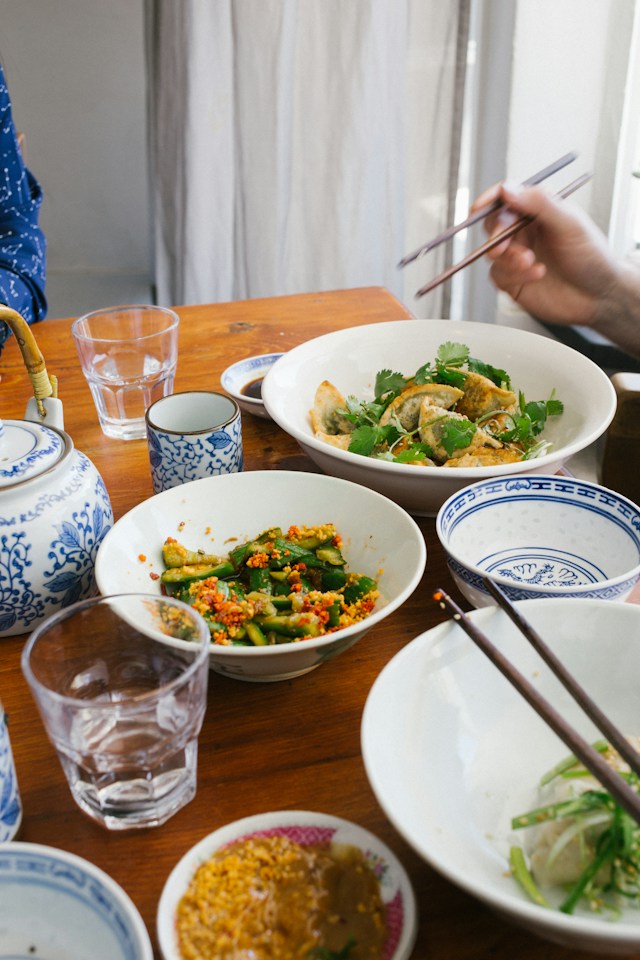
Quick answer: The best Chinese dishes for multi-generational family dinners are shareable, varied in texture, and easy to customize for different ages and spice tolerances. Think whole steamed fish, soy-braised short ribs, clay pot rice, dumplings, and a mix of stir-fried vegetables. Rounding out the table with soup and a lighter dessert keeps the meal balanced from grandparents to grandchildren.
Family dinners stretch on for hours when three or four generations gather around one table. Grandparents want comfort and familiar flavors. Parents want something that feels special but not fussy to prepare. Kids want food they’ll actually eat without a negotiation. Chinese cuisine, built around shared plates and a lazy Susan, solves this problem better than almost any other culinary tradition.
The genius of a Chinese family meal lies in its structure. Nobody orders a single entrée meant only for themselves. Instead, dishes land in the center of the table, and everyone picks what they want, as much as they want, at their own pace. That format naturally accommodates a toddler’s limited palate and a grandfather’s dietary restrictions without anyone feeling left out.
This guide walks through dish categories that consistently work for long, multi-generational dinners, along with practical reasoning for why each one earns its spot on the table.
Why does shared-plate dining work so well for mixed-age gatherings?
Shared-plate dining removes the pressure of choosing one “right” dish for a table full of different appetites and preferences. A teenager can load up on crispy fried items while a grandparent sticks to softer, milder options, all from the same spread. Dishes also arrive gradually in many Chinese dining traditions, which keeps conversation flowing and gives the meal room to breathe over two or three hours rather than rushing through courses.
This format also solves the texture problem that trips up a lot of family menus. Older family members, particularly those with dental issues, often need softer foods, while younger kids might not have the patience for anything too chewy or bony. A well-planned Chinese dinner naturally includes a spectrum of textures: silky, crisp, tender, and chewy, so everyone finds something comfortable to eat.
What main dishes hold up best for a multi-generational table?
Whole steamed fish
A whole steamed fish, often sea bass or grouper, dressed simply with ginger, scallion, and a splash of hot soy sauce, is a centerpiece dish at Chinese family gatherings for good reason. The flesh is tender enough for grandparents and children alike, and the mild, clean flavor doesn’t alienate anyone at the table. Steaming also keeps the dish light, which matters when the meal includes several other rich courses.
Soy-braised short ribs or pork belly
Braised meats like soy-sauce short ribs or red-braised pork belly (hong shao rou) deliver deep, savory flavor that appeals across generations. The long cooking process breaks down connective tissue until the meat is nearly falling apart, which makes it easy to eat for family members with limited chewing ability. The sauce, built on soy sauce, sugar, and aromatics, tends to be a crowd-pleaser because it’s rich without being aggressively spicy.
Clay pot rice or fried rice
A clay pot rice dish, layered with Chinese sausage, mushrooms, and sometimes chicken, acts almost like a one-pot meal within the larger spread. It’s filling, comforting, and familiar even to family members who are hesitant about trying unfamiliar dishes. Fried rice serves a similar role and has the advantage of using up odds and ends from the fridge, which matters if you’re cooking for a big crowd on a budget.
Dumplings or wontons
Dumplings bring a hands-on, communal element to the table that works particularly well when kids are present. Folding dumplings together as a family activity before the meal can even become part of the gathering itself. Steamed or boiled dumplings tend to be gentler on digestion than fried versions, making them a safer bet for older relatives, while a plate of pan-fried potstickers satisfies anyone craving crunch.
What vegetable and tofu dishes balance out a rich menu?
Stir-fried greens
A simple stir-fried green vegetable, such as gai lan (Chinese broccoli), bok choy, or snow pea shoots, tossed with garlic, provides a necessary counterpoint to the richer braised and fried dishes on the table. These dishes cook quickly, retain a pleasant crunch, and introduce freshness that keeps the meal from feeling heavy by the second hour.
Mapo tofu (mild version)
Mapo tofu is traditionally spicy, but a toned-down version, with less chili oil and Sichuan peppercorn, works well for mixed-age tables. The tofu itself is soft and easy to eat, and the savory sauce appeals to kids more than you’d expect. Keeping a small bowl of chili oil on the side lets spice-loving family members adjust the heat to their liking without affecting the whole dish.
Eggplant with garlic sauce
Braised eggplant, silky and infused with a garlicky, slightly sweet sauce, tends to win over even family members who claim they don’t like eggplant. Its texture is soft enough for older relatives, and the mild sweetness makes it approachable for children.
What soups work well for a long family dinner?
Winter melon or lotus root soup
A clear, light soup like winter melon with pork ribs, or lotus root with peanuts, serves an important function at a long family meal. It cleanses the palate between richer dishes and gives the table something warm and soothing throughout the meal rather than serving as a single course at the start. These soups also tend to be gentle on digestion, which matters for elderly relatives.
Hot and sour soup
Hot and sour soup brings a bit more excitement to the table with its tangy, peppery broth. It’s a good option if the family enjoys bolder flavors, though it’s worth keeping a milder soup as a backup option for anyone sensitive to vinegar or white pepper.
How should you balance spice levels across generations?
Spice tolerance is often the biggest point of friction at a multi-generational Chinese dinner. Younger children and older relatives frequently prefer milder flavors, while younger adults might want more heat. The simplest solution is to keep spicy condiments, chili oil, chili flakes, pickled peppers, on the side rather than cooking them directly into shared dishes. This way, each family member adjusts their own plate without needing a second version of the same dish.
Choose Sichuan-style dishes like mapo tofu or dan dan noodles if your family generally enjoys heat and can handle a milder base recipe. Choose Cantonese-style steaming and braising techniques if you’re serving a table where several members prefer gentle, non-spicy flavors. Cantonese cuisine in particular is built around preserving the natural taste of ingredients rather than masking it with heat, which makes it a safer default for large, mixed gatherings.
What desserts suit a Chinese family dinner?
Dessert at a Chinese family meal tends to be lighter than what Western diners might expect. Fresh fruit, particularly orange slices or lychee, often rounds out the meal naturally. For something slightly more festive, sweet red bean soup or a light almond tofu (jello-like, not the bean curd) offers a gentle, not-too-sweet ending that won’t leave anyone feeling overly full after a multi-course meal.
How many dishes should you plan for a large family dinner?
A common guideline is to plan one dish per person, plus one extra, when dishes are meant to be shared across the table. For a family of eight, that means roughly nine dishes spread across proteins, vegetables, a starch like rice or noodles, and soup. This ratio ensures variety without overwhelming the table or creating excessive leftovers, though many families lean toward over-ordering slightly since leftovers reheat well and nobody wants an empty platter mid-meal.
Choosing dishes for specific family needs
Choose steamed and braised dishes if your family includes elderly members or young children, since these cooking methods produce tender textures that are easier to chew and digest. Choose a mix of fried and stir-fried dishes if the table skews younger and prefers bolder textures and flavors. Choose vegetarian-friendly options like mapo tofu, eggplant, and stir-fried greens if any family members avoid meat, since these dishes integrate naturally into the shared-plate format without requiring a separate menu.
Bringing it all together
A successful multi-generational Chinese family dinner with springcourt.com.sg isn’t about finding one perfect dish everyone loves equally. It’s about building a table where a dozen different preferences can all find something satisfying. A whole steamed fish anchors the meal with something universally appealing. Braised meats add richness. Stir-fried vegetables and a light soup keep things balanced. Dumplings bring everyone together, sometimes literally, in the kitchen before the meal even starts.
The next time you’re planning a long family dinner spanning several generations, start with one protein-forward braised dish, one whole fish, one vegetable stir-fry, a pot of rice, and a soup. From there, add dumplings or a tofu dish depending on your family’s preferences, and keep spicy condiments on the side. That foundation covers nearly every palate at the table and gives the meal the variety it needs to stretch comfortably across a few unhurried hours.
Frequently Asked Questions
What’s the easiest Chinese dish to make for a large family gathering?
Clay pot rice or fried rice tends to be the easiest option since it can be prepared largely in advance, scales up easily for a crowd, and appeals to nearly every age group without requiring last-minute cooking.
How do I accommodate picky eaters at a Chinese family dinner?
Stick to mild, familiar dishes like steamed fish, fried rice, and simple stir-fried vegetables, and keep bold condiments like chili oil or fermented bean paste on the side so picky eaters can avoid them entirely.
Are Chinese family dinners typically spicy?
Not necessarily. Cantonese cuisine, which emphasizes steaming and light braising, is generally mild. Sichuan cuisine leans spicier, but families can moderate heat by serving chili condiments separately rather than cooking them into shared dishes.
How far in advance can I prepare dishes for a long family dinner?
Braised dishes like soy-braised short ribs often taste better the next day, making them ideal for advance preparation. Soups also hold well when made a day ahead. Save stir-fried vegetables and freshly steamed fish for just before serving, since these dishes lose their texture and freshness if reheated.
What should I serve if some family members are vegetarian?
Mapo tofu, braised eggplant, stir-fried greens, and vegetable dumplings all work well as vegetarian options that fit naturally into a shared-plate meal without needing a separate menu for vegetarian guests.