
TL;DR: Commercial kitchen exhaust systems remove heat, smoke, grease, and combustion gases from professional cooking environments. They protect staff, comply with fire and health codes, and directly affect a restaurant’s ability to operate. Skimping on this infrastructure creates safety, legal, and operational risks that far outweigh the upfront cost.
Walk into any successful restaurant, and you’ll notice the food, the ambiance, the service. What you won’t notice—what you’re never supposed to notice—is the exhaust system humming overhead, pulling thousands of cubic feet of hot, grease-laden air out of the kitchen every minute. That invisibility is a sign it’s working perfectly.
But behind that seamless operation is a system of carefully engineered components, strict code compliance, and ongoing maintenance. For restaurant owners, chefs, and foodservice operators, understanding commercial kitchen exhaust systems isn’t just a technical exercise. It’s essential knowledge that affects staff safety, energy costs, fire risk, and the long-term viability of the business.
This guide breaks down how commercial kitchen exhaust systems work, what they’re made of, how to choose the right one, and what happens when operators get it wrong.
What Does a Commercial Kitchen Exhaust System Actually Do?
A commercial kitchen exhaust system serves one fundamental purpose: to remove contaminants from the cooking environment before they cause harm. Those contaminants include:
- Grease-laden vapors, which coat surfaces, create slip hazards, and are highly flammable
- Combustion gases like carbon monoxide, produced by gas-fired cooking equipment
- Heat and humidity, which make kitchen environments dangerous and uncomfortable for staff
- Smoke and particulates, which affect air quality and trigger fire suppression systems
The system works by creating negative pressure above cooking equipment, drawing contaminated air upward through a hood, filtering it through grease traps, and exhausting it outside the building. Fresh, conditioned makeup air replaces what’s expelled—maintaining a breathable, temperature-controlled environment for kitchen staff.
Without this cycle, a commercial kitchen becomes a genuine hazard. Grease accumulates on every surface. Temperatures climb to dangerous levels. Carbon monoxide concentrations rise. And fire risk escalates rapidly.
What Are the Main Components of a Commercial Kitchen Exhaust System?
Understanding the system means understanding its parts. Each component plays a specific role, and a weakness in any one of them compromises the entire system.
The Exhaust Hood
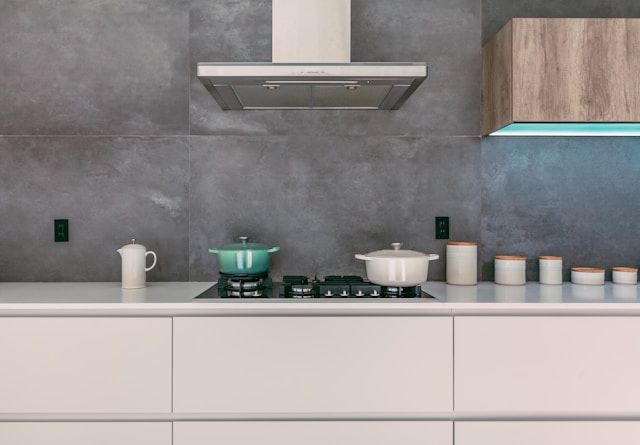
The hood is the most visible part of the system. It’s positioned directly above cooking equipment to capture rising heat, steam, and grease before they disperse into the kitchen. Hood design varies depending on cooking volume and equipment type.
Type I hoods are required above equipment that produces grease—fryers, griddles, woks, and open-flame ranges. They include grease filters and are built to withstand high temperatures. Type II hoods handle heat and steam from equipment like dishwashers and steamers, where grease is not a primary concern.
Hood sizing matters enormously. An undersized hood fails to capture all the effluent, while an oversized hood wastes energy by pulling conditioned air out of the dining room. Most engineers calculate hood sizing based on cooking equipment type, heat output (measured in BTUs), and the distance between the hood and the cooking surface.
Grease Filters and Grease Traps
Grease filters—also called grease extractors or baffles—sit inside the hood and capture airborne grease particles before they enter the ductwork. Baffle filters are the industry standard for commercial kitchens because they’re effective, durable, and cleanable.
Below the filters, grease traps (or grease cups) collect the liquid grease that drains down. These must be cleaned regularly. A neglected grease trap overflows, coating ductwork in accumulated fat—exactly the fire hazard the system is designed to prevent.
The Ductwork
Duct runs connect the hood to the exterior exhaust point. In commercial applications, ductwork must be constructed from a minimum of 16-gauge carbon steel or 18-gauge stainless steel, per NFPA 96 standards. The duct must maintain a continuous upward slope to prevent grease pooling, and access panels must be installed at regular intervals to allow cleaning.
This is where many operators underestimate the complexity. Commercial kitchen duct runs are often long, change direction multiple times, and pass through walls and floors that require fire-rated enclosures. Poor duct design—kinks, unnecessary bends, inadequate slope—reduces airflow and creates grease accumulation points.
The Exhaust Fan
The exhaust fan generates the negative pressure that pulls air through the entire system. Fan selection is governed by the required airflow rate, measured in cubic feet per minute (CFM), which is calculated based on cooking equipment, hood dimensions, and local code requirements.
Commercial exhaust fans are typically upblast models mounted on the rooftop, which discharge air upward and away from the building. They must be grease-rated—meaning they’re designed to handle grease-laden air without seizing or becoming a fire source themselves.
The Makeup Air System
For every cubic foot of air exhausted, a cubic foot of makeup air must enter the kitchen. Without adequate makeup air, the kitchen operates under excessive negative pressure. Doors become difficult to open, flames on gas equipment become unstable, and the exhaust system itself loses efficiency.
Makeup air units supply tempered (pre-conditioned) air through ceiling diffusers or short-circuit supplies built into the hood itself. In cold climates, heating makeup air is critical—introducing large volumes of unconditioned winter air makes kitchens cold and drives up energy costs.
What Fire and Safety Codes Govern Commercial Kitchen Exhaust Systems?
Compliance is non-negotiable. The primary standard in the United States is NFPA 96: Standard for Ventilation Control and Fire Protection of Commercial Cooking Operations. This document governs everything from hood clearances and duct construction to fire suppression systems and cleaning schedules.
In addition to NFPA 96, operators must comply with:
- International Mechanical Code (IMC) and local mechanical codes
- International Fire Code (IFC)
- Local health department requirements, which often exceed base code standards
- Insurance carrier requirements, which may mandate specific cleaning intervals or suppression system types
Most jurisdictions require a fire suppression system integrated into the hood above high-heat cooking equipment. These systems discharge wet chemical agents directly onto cooking surfaces and into the duct when a fire is detected. Regular inspection and servicing of these systems is a code requirement, typically every six months.
Non-compliance carries serious consequences—permit revocations, forced closures, failed health inspections, and in the event of a fire, voided insurance coverage.
How Do You Choose the Right Exhaust System for a Commercial Kitchen?
The right system depends on several factors, and getting the specification wrong is an expensive mistake.
What type of cooking equipment will the kitchen use?
High-heat equipment like charbroilers and woks requires significantly higher exhaust rates than lower-intensity equipment like steamers or convection ovens. A kitchen built around a charbroiler needs a different hood design, fan capacity, and grease management approach than one centered on a pasta line.
What are the local code requirements and inspection expectations?
Building and fire departments interpret national codes differently, and local amendments add complexity. Engaging a mechanical engineer with commercial kitchen experience early in the design process prevents costly design revisions during permitting.
What is the long-term energy cost of the system?
Traditional exhaust systems run at fixed speeds, exhausting the same volume of air regardless of cooking activity. Demand-controlled kitchen ventilation (DCKV) systems use sensors to measure heat, smoke, and particulates above the cooking line, adjusting fan speed in real time. According to the Food Service Technology Center, DCKV systems can reduce exhaust fan energy use by 30–50% compared to fixed-speed systems—a significant operational saving over the life of the equipment.
How will the system be cleaned and maintained?
NFPA 96 mandates hood and duct cleaning at intervals ranging from monthly (for high-volume solid-fuel cooking) to annually (for low-volume operations). Operators should evaluate how accessible the ductwork is for cleaning crews and whether the design accommodates required access panels before construction begins.
What Are the Most Common Mistakes Operators Make With Kitchen Exhaust Systems?
Experience across the industry points to a handful of recurring errors.
Undersizing the system to save on upfront costs is the most common. A smaller hood or lower-capacity fan may pass initial inspection, but it underperforms during peak service, leading to smoke infiltration into the dining room, staff complaints, and grease accumulation in the kitchen.
Neglecting cleaning schedules is equally damaging. Grease builds up in ducts and on fan blades. Even a thin layer of accumulated grease dramatically increases fire risk. Kitchen fires that originate in duct systems are notoriously difficult to extinguish and frequently result in total business losses.
Failing to account for makeup air during renovation creates a system that fights itself. An exhaust fan pulling 4,000 CFM from a poorly sealed kitchen generates negative pressure that destabilizes gas flames, pulls conditioned air from the dining room, and reduces the effective capture velocity of the hood.
Ignoring the fire suppression system between required inspections is a liability no operator should accept. These systems contain pressurized chemical agents with expiry dates. An outdated or improperly maintained suppression system may fail to activate when needed.
What Does a Commercial Kitchen Exhaust System Cost—and Is It Worth It?
Costs vary widely based on kitchen size, equipment configuration, geographic location, and whether the installation is new construction or a retrofit. A basic hood-and-fan system for a small commercial kitchen might start around $3,000–$8,000 installed. Full systems for high-volume or multi-line operations, including makeup air units, DCKV controls, and fire suppression, can exceed $50,000–$100,000.
The return on that investment is harder to quantify but very real. A properly designed system:
- Reduces fire risk, protecting the entire business asset
- Lowers energy consumption through demand-controlled ventilation
- Extends the lifespan of cooking equipment by managing heat exposure
- Protects staff from heat stress and respiratory hazards
- Keeps the operation in compliance and insurable
A kitchen fire traced to a grease duct costs multiples of what the system itself would have cost. The business interruption alone—weeks or months of closure for repairs—can be fatal to smaller operators.
Keeping Your Kitchen Running: Final Thoughts
Commercial kitchen exhaust systems occupy a paradox. They’re among the most critical infrastructure in any foodservice operation, yet they’re designed to be completely invisible to the people who benefit most from them. That invisibility requires active maintenance to sustain.
For operators planning new builds, the time to engage a qualified mechanical engineer and exhaust system specialist is at the design phase—not during construction, and certainly not after the first failed inspection. For operators running existing kitchens, a professional assessment of the current system’s capacity, cleanliness, and compliance status is a worthwhile investment.
The food gets the reviews. The exhaust system keeps the kitchen running long enough to earn them.
Frequently Asked Questions About Commercial Kitchen Exhaust Systems
What is the difference between a Type I and Type II commercial kitchen hood?
A Type I hood is required above grease-producing cooking equipment such as fryers, griddles, and open-flame ranges. It includes grease filters and a fire suppression system. A Type II hood handles heat and moisture from equipment that doesn’t produce grease, such as dishwashers and steamers, and does not require a fire suppression system.
How often does a commercial kitchen exhaust system need to be cleaned?
NFPA 96 sets cleaning intervals based on cooking volume and fuel type. High-volume cooking operations using solid fuels require monthly cleaning. Wood or charcoal-burning operations need quarterly cleaning. Standard gas or electric commercial kitchens typically require cleaning every six months to annually, depending on usage.
Does a commercial kitchen exhaust system need a makeup air unit?
Yes. Every commercial exhaust system requires a makeup air supply to replace the air being exhausted. Without adequate makeup air, the kitchen operates under negative pressure, which reduces exhaust efficiency, destabilizes gas flames, and can draw air from unintended areas like dining rooms.
What is demand-controlled kitchen ventilation (DCKV), and is it worth the cost?
DCKV systems use sensors above the cooking line to measure heat and particulates in real time, adjusting exhaust fan speeds accordingly. According to the Food Service Technology Center, DCKV can reduce fan energy consumption by 30–50% compared to fixed-speed systems, making it a cost-effective option for most commercial kitchens over a 5–10 year period.
What happens if a commercial kitchen exhaust system is not NFPA 96 compliant?
Non-compliance can result in failed health or fire inspections, permit revocations, forced closures, and voided insurance coverage. In the event of a grease fire, a non-compliant system may be cited as a contributing cause, exposing the owner to significant legal and financial liability.