
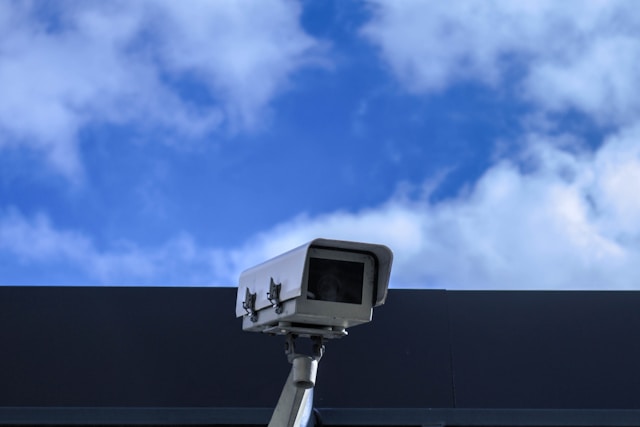
TL;DR: Commercial CCTV security gives businesses continuous, around-the-clock surveillance that deters crime, reduces liability, and supports smarter operations. Modern systems go far beyond basic recording—offering remote monitoring, AI-powered alerts, and integration with broader security infrastructure to protect people, assets, and premises at all hours.
Running a business comes with a long list of responsibilities. Payroll, staffing, customer service, compliance—the list never really ends. Security, however, is one area where gaps can have consequences that no spreadsheet can fix. A break-in after hours. A slip-and-fall dispute. An employee theft incident caught too late. These aren’t hypothetical risks; they’re the kind of events that cost businesses thousands of dollars and countless hours every year.
Commercial CCTV security has become one of the most reliable tools businesses use to manage these risks. And while the concept of a camera watching over your premises might seem straightforward, the technology behind modern systems—and the strategic value they deliver—is far more sophisticated than most business owners realize.
This guide covers everything you need to know about commercial CCTV security: how it works, why it matters, what to look for in a system, and how businesses of all sizes are using it to operate with greater confidence every single day.
What Is Commercial CCTV Security?
Commercial CCTV (Closed-Circuit Television) security refers to a network of cameras and recording equipment installed on business premises to monitor activity, deter criminal behavior, and capture footage for review or evidence. Unlike residential systems, commercial CCTV setups are typically larger in scale, more technically robust, and designed to handle higher-traffic environments—think retail floors, warehouses, office buildings, parking lots, and manufacturing facilities.
Modern commercial CCTV systems don’t just record. They stream footage in real time to on-site monitors or remote viewing platforms, trigger alerts when motion or unusual behavior is detected, and integrate with access control systems, alarms, and analytics software. The result is a comprehensive security ecosystem rather than a simple recording device.
Why Do Businesses Need Around-the-Clock Surveillance?
Most security incidents don’t happen during business hours when staff are present. Burglaries, vandalism, unauthorized access, and equipment theft tend to occur at night, on weekends, or during holidays—precisely when businesses are most vulnerable.
A 24/7 CCTV system addresses this vulnerability directly. Cameras don’t take breaks, don’t get distracted, and don’t miss a shift. They capture everything, continuously, without the fatigue or inconsistency that human monitoring inevitably introduces.
There’s also the deterrence factor. Studies have consistently shown that visible security cameras reduce the likelihood of criminal activity. When a potential intruder sees cameras positioned at entry points, parking areas, and storage zones, the calculus changes. The risk of being identified and caught is simply too high.
Beyond crime prevention, continuous surveillance supports businesses in ways that aren’t always obvious at first glance.
What Are the Key Benefits of Commercial CCTV for Businesses?
How Does CCTV Deter Crime and Reduce Theft?
Deterrence is the most immediate benefit. Prominently installed cameras signal that a business takes security seriously—and that anyone who attempts to steal, vandalize, or trespass will be recorded. This applies to both external threats (burglars, vandals) and internal ones (employee theft, which accounts for a significant portion of business losses each year).
For retail businesses especially, CCTV placement in high-value areas and at checkout points creates a visible layer of accountability that reduces shrinkage without requiring additional staff.
Can Commercial CCTV Help with Insurance and Liability Claims?
Yes—and this is one of the most financially significant benefits for business owners. When an incident occurs on your premises, whether it’s a customer injury, a vehicle collision in your parking lot, or a disputed altercation, CCTV footage provides an objective account of what happened.
This matters for two reasons. First, it protects your business against fraudulent claims. Slip-and-fall fraud is a real and costly problem across many industries. Footage that contradicts a claimant’s account can save a business tens of thousands of dollars in legal fees and settlements.
Second, many commercial insurance providers offer reduced premiums for businesses with verified CCTV systems in place. The presence of surveillance demonstrates risk mitigation, which translates directly into lower policy costs.
How Does Remote CCTV Monitoring Work for Business Owners?
Modern commercial CCTV systems connect to cloud platforms or secure network video recorders (NVRs) that allow footage to be accessed remotely via smartphone, tablet, or computer. Business owners can check live feeds from anywhere in the world, review archived footage, and receive real-time alerts when the system detects motion or a triggered event.
This capability is especially valuable for multi-site businesses. A franchise owner with five locations doesn’t need to be physically present at each one to stay informed. A logistics manager overseeing a distribution center can monitor loading dock activity during overnight shifts without being on-site. Remote access turns a passive recording system into an active management tool.
What Role Does CCTV Play in Employee Safety and HR?
CCTV systems contribute to a safer workplace in several meaningful ways. In environments where staff work alone—late-night retail shifts, warehouses with night crews, healthcare facilities—cameras provide a layer of protection and a rapid response mechanism if something goes wrong.
From an HR perspective, footage can resolve disputes between employees, clarify the sequence of events following a workplace accident, and provide evidence in disciplinary procedures. This removes ambiguity from processes that are often contentious and time-consuming.
It’s worth noting that businesses must comply with relevant privacy regulations when deploying cameras in workplaces. Staff should be informed of where cameras are located, and cameras should never be installed in areas where employees have a reasonable expectation of privacy, such as bathrooms or changing rooms.
What Features Should You Look for in a Commercial CCTV System?
Not all CCTV systems are created equal. The right system for a small retail store differs significantly from what a large logistics facility needs. Here are the core features worth evaluating:
High-Definition Resolution
Low-resolution footage is often unusable as evidence. Modern commercial systems should capture at a minimum of 1080p (Full HD), with 4K options available for environments where identifying fine detail—like faces or license plates—is critical.
Night Vision and Low-Light Performance
Given that many incidents happen after dark, infrared (IR) night vision capability is non-negotiable. Look for cameras rated for low-light performance with a wide dynamic range to handle environments where bright and dark areas coexist (like a storefront entrance with interior lighting and a dark parking lot).
Wide-Angle and PTZ Coverage
Wide-angle cameras cover large areas efficiently. Pan-Tilt-Zoom (PTZ) cameras allow operators—or automated systems—to track movement across a wider field, making them ideal for open spaces like warehouses, car parks, and event venues.
Motion Detection and Smart Alerts
Basic motion detection triggers recording when movement is sensed, reducing storage requirements and making it easier to locate relevant footage. More advanced systems use AI-powered analytics to distinguish between people, vehicles, and animals—reducing false alarms and improving the quality of alerts.
Secure Storage and Backup
Footage should be stored securely, either on-site via an NVR or in the cloud with encryption. Cloud storage has the added advantage of being tamper-proof—if on-site hardware is stolen or damaged, footage remains accessible remotely.
Scalability and Integration
A good commercial CCTV system should integrate with your existing security infrastructure—alarms, access control, intercoms—and scale as your business grows. Adding cameras to a new location or expanding coverage should be straightforward, not a complete system overhaul.
How Should Businesses Position CCTV Cameras for Maximum Coverage?
Strategic placement is as important as the quality of the cameras themselves. The following locations are typically prioritized in commercial installations:
- Entry and exit points: All doors, gates, and loading bays should be covered. These are the most common points of unauthorized access.
- Car parks and perimeters: Outdoor coverage deters vehicle theft, vandalism, and loitering before threats reach the building.
- High-value areas: Server rooms, safes, stockrooms, and display cases warrant close monitoring.
- Cash handling zones: Point-of-sale areas and cash offices require coverage for both theft prevention and dispute resolution.
- Common areas: Reception, break rooms, and corridors support general monitoring and employee safety.
A professional security installer will conduct a site assessment to identify blind spots, optimal mounting heights, and the right camera types for each zone.
Is Commercial CCTV Worth the Investment for Small Businesses?
For small businesses, the upfront cost of a CCTV system can feel significant—but it needs to be weighed against what it protects. A single break-in, one fraudulent liability claim, or an unresolved theft incident can easily exceed the cost of a full system installation.
Entry-level commercial systems have become far more affordable in recent years, with IP-based cameras and cloud storage eliminating much of the hardware complexity that previously drove up costs. Many providers offer scalable packages that allow small businesses to start with a core setup and expand coverage over time.
The ongoing value—insurance savings, crime deterrence, operational visibility, and peace of mind—compounds over time. For most businesses, the question isn’t whether CCTV is worth the investment. It’s whether the cost of not having it is a risk worth taking.
Protect Your Business Around the Clock
Security gaps don’t announce themselves. They’re discovered after a loss, after a dispute, or after something goes wrong that could have been prevented. Commercial CCTV security removes many of those gaps entirely—providing a reliable, continuous layer of protection that operates whether your team is on-site or not.
The best time to invest in a commercial surveillance system is before an incident occurs. A professional security assessment can help you identify vulnerabilities, determine the right system for your premises, and design a camera layout that delivers complete coverage.
If you’re ready to take the next step, speak with a certified commercial security installer who can assess your specific needs and recommend a solution built for your business.
Frequently Asked Questions About Commercial CCTV Security
How long is CCTV footage typically stored for commercial properties?
Most commercial CCTV security systems store footage for 30 days by default, though this varies by system and storage capacity. High-security environments—such as financial institutions or large retail chains—may retain footage for 90 days or longer. Cloud storage options make extended retention more practical and cost-effective.
What is the difference between commercial CCTV and residential CCTV?
Commercial CCTV systems are designed for larger-scale, higher-traffic environments. They typically offer greater camera capacity, more robust storage infrastructure, advanced analytics, integration with access control and alarm systems, and support for professional monitoring services. Residential systems are simpler, smaller in scale, and not built for the demands of a business environment.
Do I need to notify customers or staff about CCTV cameras in my business?
In most jurisdictions, businesses are legally required to notify individuals that CCTV is in operation—typically through visible signage at entry points. Cameras must not be placed in areas where individuals have a reasonable expectation of privacy. Specific requirements vary by country and region, so consulting with a legal or security professional is advisable.
Can CCTV footage be used as evidence in court?
Yes. CCTV footage is widely accepted as evidence in civil and criminal proceedings, provided it is authentic, unaltered, and obtained lawfully. High-resolution footage with accurate timestamps significantly strengthens its admissibility and value in legal contexts.
What is the best type of CCTV camera for outdoor commercial use?
For outdoor commercial use, dome or bullet cameras with weatherproof (IP66 or higher) ratings, infrared night vision, and wide dynamic range are generally recommended. PTZ cameras are ideal for covering large outdoor areas like car parks. The specific choice depends on the coverage area, lighting conditions, and mounting options available.