
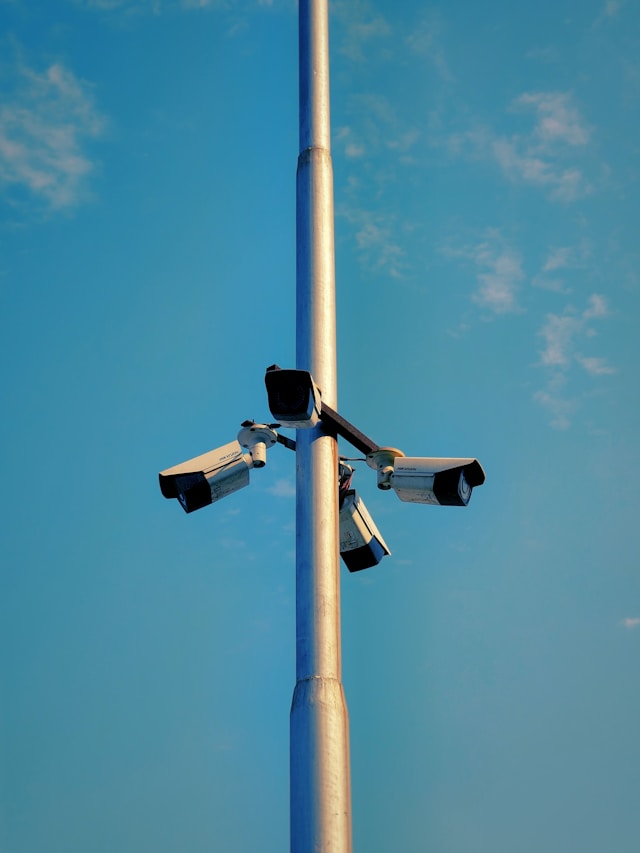
TL;DR: Commercial CCTV systems help businesses prevent theft, liability fraud, and operational inefficiencies by providing real-time monitoring, recorded evidence, and visible deterrents. Modern systems go beyond simple recording—they use AI-powered analytics to flag incidents before losses occur, making them one of the most cost-effective risk management tools available to business owners today.
Shrinkage. It’s the retail industry’s polite word for a painful reality. According to the National Retail Security Survey, U.S. retailers lose over $112 billion annually to shrinkage—a figure that includes shoplifting, employee theft, vendor fraud, and administrative error. And retail isn’t alone. Warehouses, hospitality venues, office buildings, and construction sites all face their own versions of the same problem: assets walking out the door, incidents going unwitnessed, and losses that only become apparent long after the damage is done.
The difference between businesses that contain these losses and those that don’t often comes down to one thing—visibility. Commercial CCTV security solutions give businesses that visibility, not just after an incident, but before and during one. Modern systems have evolved well beyond the grainy, fixed-angle cameras of the past. Today’s commercial-grade CCTV integrates AI-driven analytics, remote monitoring, cloud storage, and smart alerts that turn passive surveillance into an active loss-prevention strategy.
This guide breaks down how commercial CCTV systems work, what features matter most, and how to choose the right setup for your business—whether you’re protecting a single storefront or a multi-site enterprise.
What Makes Commercial CCTV Different from Residential Systems?
The gap between a home security camera and a commercial CCTV system is significant. Residential systems are designed for convenience—easy setup, smartphone alerts, and basic motion detection. Commercial systems are engineered for reliability, scale, and precision under demanding conditions.
Key differences include:
- Higher resolution and coverage: Commercial cameras typically offer 4K or higher resolution with wide-angle or PTZ (pan-tilt-zoom) functionality, capturing detail across large areas without blind spots.
- 24/7 durability: Built for continuous operation, commercial cameras are rated for extreme temperatures, vandalism resistance, and high-traffic environments.
- Scalability: A commercial system can expand from 4 cameras to 400 without replacing the core infrastructure.
- Integration capabilities: Commercial CCTV integrates with access control systems, alarm panels, POS terminals, and HR software—creating a unified security ecosystem rather than a standalone camera feed.
For businesses where the stakes are higher and the environments more complex, commercial-grade systems aren’t an upgrade—they’re a necessity.
How Commercial CCTV Systems Prevent Business Losses
Can CCTV cameras deter theft before it happens?
Yes—and this is one of their most underappreciated functions. The visible presence of cameras is a proven deterrent. A study by the University of North Carolina found that 60% of convicted burglars said camera presence would cause them to abandon a target entirely. For organized retail crime, where groups scout locations in advance, a well-positioned camera system signals that the business is not an easy mark.
Beyond deterrence, commercial CCTV prevents losses through several active mechanisms:
Real-time monitoring and alerts
Modern systems use AI-powered video analytics to detect unusual behavior and trigger instant alerts. This includes loitering detection, perimeter breaches, crowd formation in restricted areas, and even specific behaviors like someone concealing merchandise. Security staff can respond in real time—before a theft is completed, not after.
POS integration for internal theft
Employee theft accounts for approximately 29% of retail shrinkage, according to the National Retail Security Survey. By integrating CCTV footage with point-of-sale (POS) data, loss prevention teams can flag suspicious transaction patterns—like repeated no-sale drawer opens, voided transactions, or discounts applied without managerial approval—and cross-reference them with camera footage from the same register at the same time.
Slip-and-fall fraud prevention
Fraudulent liability claims cost U.S. businesses billions each year. High-definition CCTV footage provides timestamped, irrefutable evidence of what actually occurred—protecting businesses from staged accidents and exaggerated injury claims. Insurance companies increasingly request CCTV footage during claim investigations, and businesses with comprehensive coverage often receive reduced premiums as a result.
What role does AI analytics play in commercial CCTV loss prevention?
AI-powered video analytics represent the most significant leap forward in commercial surveillance. Rather than requiring a human operator to watch every feed continuously, AI systems analyze footage autonomously and surface only the events that matter.
Common AI analytics features in commercial CCTV include:
- Object detection: Identifies specific items, vehicles, or individuals across multiple camera feeds simultaneously.
- Behavior analysis: Flags patterns associated with shoplifting, such as extended dwell time in low-traffic areas or repeated product handling without purchase.
- Heat mapping: Visualizes customer movement patterns throughout a store or facility, helping identify both security vulnerabilities and underperforming floor layouts.
- Facial recognition: Available in enterprise-grade systems, this feature can flag known shoplifters or restricted individuals upon entry.
- License plate recognition (LPR): Useful for parking facilities, logistics yards, and any business tracking vehicle access.
For multi-site businesses, centralized AI monitoring allows a single security team to manage dozens of locations simultaneously—dramatically reducing staffing costs without sacrificing coverage.
Choosing the Right Commercial CCTV System for Your Business
What type of commercial CCTV camera is best for your environment?
Not every camera suits every environment. Selecting the wrong type leads to blind spots, poor image quality, and security gaps that defeat the purpose of the system entirely.
Dome cameras are ceiling-mounted, vandal-resistant, and ideal for retail floors, hotel lobbies, and office interiors where aesthetics and wide-angle coverage matter.
Bullet cameras offer long-range, directional coverage—well-suited for parking lots, building exteriors, and warehouse aisles where distance is a priority.
PTZ cameras (pan-tilt-zoom) can be remotely controlled to track movement across large areas. They’re commonly used in large retail spaces, airports, and industrial facilities where a single operator needs to follow an incident in real time.
Thermal cameras detect heat signatures rather than visible light, making them effective for perimeter security in low-light environments like construction sites and warehouses.
Covert cameras are designed to blend into the environment—smoke detectors, light fixtures, and clocks—used in environments where overt surveillance might interfere with operations or investigations.
Should your business use cloud-based or on-premise CCTV storage?
Storage is a critical decision point. The two main options—cloud-based and on-premise (NVR/DVR)—each carry distinct trade-offs.
Cloud-based storage offers remote access from any device, automatic backups, and scalable capacity without hardware investment. It’s ideal for small-to-medium businesses and multi-site operations where centralized access matters. The downside is an ongoing subscription cost and dependency on a reliable internet connection.
On-premise storage via NVR (Network Video Recorder) or DVR (Digital Video Recorder) keeps footage local, which means faster retrieval and no recurring cloud fees. However, on-site servers are vulnerable to physical theft, fire, or hardware failure—meaning footage can be lost precisely when it’s needed most.
Many enterprises opt for a hybrid approach: storing recent footage locally for fast access while archiving older footage to the cloud for long-term retention and redundancy.
How many cameras does a commercial business actually need?
There’s no universal answer, but the following framework helps:
- Retail stores under 5,000 sq ft: 8–16 cameras, covering all entry/exit points, registers, stockrooms, and high-value merchandise areas.
- Warehouses and logistics facilities: Coverage should prioritize loading docks, inventory storage zones, and access-controlled areas. Expect 20–50+ cameras depending on size.
- Restaurants and hospitality venues: Focus on entrances, cash handling areas, and kitchen access points. 6–20 cameras is typical.
- Office buildings: Elevator banks, stairwells, server rooms, and reception areas are the priority. Multi-floor buildings require a structured camera layout by floor.
A professional security assessment—where an installer surveys the space and maps blind spots—is the most reliable way to determine exact camera count and positioning.
The ROI of Commercial CCTV: Does the Investment Pay Off?
Security spending is sometimes treated as a sunk cost—a necessary expense with no measurable return. That framing doesn’t hold up. Commercial CCTV delivers measurable ROI across several categories:
Reduced shrinkage: Even a modest reduction in theft across a mid-size retail operation can recover the cost of a full camera system within the first year.
Lower insurance premiums: Many commercial insurers offer discounts of 5–20% for businesses with verified CCTV systems, particularly when cameras cover all entry and exit points.
Reduced liability exposure: Documented footage reduces the cost and duration of legal disputes, whether the business is defending against a fraudulent claim or pursuing one of its own.
Operational insights: Heat mapping, traffic analysis, and behavior data generated by AI-enabled systems help businesses optimize store layouts, staffing schedules, and inventory placement—delivering value well beyond pure security.
Staff accountability: The presence of a camera system reduces internal theft and encourages procedural compliance, particularly in cash-handling environments.
Compliance, Privacy, and Legal Considerations for Commercial CCTV
Installing cameras comes with legal obligations that vary by state and industry. Businesses must:
- Post visible signage notifying employees and visitors that CCTV is in operation.
- Avoid recording in private areas, such as bathrooms or changing rooms, regardless of circumstance.
- Establish a data retention policy that defines how long footage is stored and who has access to it.
- Comply with state-specific privacy laws, particularly in California (CCPA), Illinois (BIPA), and other states with biometric data regulations when using facial recognition.
Working with a licensed commercial security installer ensures your system is compliant from day one and that documentation is in place should footage ever be required for legal proceedings.
Build a Loss Prevention Strategy That Works Around the Clock
Losses don’t announce themselves. Theft, fraud, and liability incidents happen in the moments between attention—and the businesses that suffer most are those relying on intermittent oversight and reactive responses.
A well-designed commercial CCTV system changes that equation. By combining high-resolution cameras, AI-powered analytics, and integrated monitoring, businesses gain continuous visibility that deters incidents, captures evidence, and surfaces operational risks that would otherwise go unnoticed.
The most effective security strategy isn’t built after a major loss—it’s built to prevent one. Start with a professional site assessment, identify your highest-risk areas, and invest in a system scaled to your actual needs. The cost of doing nothing consistently outweighs the cost of doing it right.
Frequently Asked Questions About Commercial CCTV Systems
How much does a commercial CCTV system cost?
Commercial CCTV security systems typically range from $1,500 to $15,000+ depending on camera count, resolution, storage type, and installation complexity. AI-enabled systems and multi-site setups carry higher upfront costs but often deliver faster ROI through loss reduction and insurance savings.
How long should commercial CCTV footage be retained?
Most businesses retain footage for 30–90 days. High-risk environments like financial institutions or pharmacies may retain footage for up to a year. Cloud-based systems make longer retention periods more practical and cost-effective.
Can commercial CCTV systems work without an internet connection?
Yes. On-premise systems using NVR or DVR storage record continuously without internet access. However, remote monitoring, cloud backup, and AI analytics typically require a stable internet connection to function.
What is the difference between CCTV and IP camera systems?
Traditional CCTV uses analog cameras connected via coaxial cable to a DVR. IP camera systems transmit digital footage over a network to an NVR. IP systems offer higher resolution, remote access, and easier scalability—making them the preferred choice for most modern commercial installations.
Are commercial CCTV systems effective against employee theft?
Yes. The combination of visible cameras and POS integration is particularly effective. Studies show that businesses using integrated CCTV and transaction monitoring reduce internal theft by up to 50% compared to those using cameras alone.