
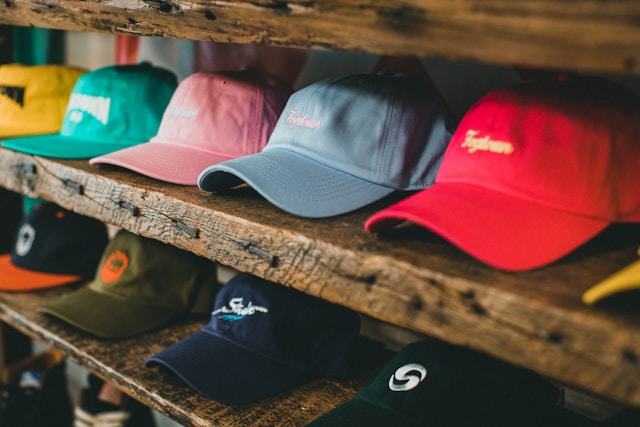
TL;DR: Custom cap printing is one of the most cost-effective ways to turn everyday merchandise into walking advertisements. From embroidery to puff printing, the right technique and design can transform a simple hat into a powerful brand-building tool—worn long after the first impression is made.
A branded cap doesn’t stay in a drawer. It goes to the gym, the farmers market, the airport, and everywhere in between. That’s the quiet power of a well-designed hat: it travels, it’s seen, and if it looks good enough, people actually want to wear it.
But here’s where most brands trip up. They slap a logo on a standard cap, order in bulk, and wonder why nobody reaches for it. The truth is, the printing technique, placement, and design all determine whether your cap becomes a staple or an afterthought. Get those elements right, and your merchandise stops being a giveaway and starts being a genuine brand asset.
This guide breaks down six cap printing ideas that are proven to grab attention, communicate quality, and keep your brand top of mind—long after the cap lands on someone’s head. Whether you’re outfitting a team, launching a product, or growing a retail line, these ideas will give you a clear starting point.
What Are the Most Effective Cap Printing Techniques for Brand Merchandise?
Before choosing a design, it helps to understand the methods available. Not every technique works on every cap, and the right choice depends on your budget, design complexity, and the look you’re going for. Here’s a breakdown of the six most effective cap printing ideas for brand building.
1. Classic Embroidery: The Technique That Signals Quality
Embroidery remains the gold standard for branded caps—and for good reason. Thread-stitched logos convey craftsmanship and permanence in a way that printed designs simply can’t replicate. When someone picks up an embroidered cap, they can feel the quality before they even look at the logo.
This technique works especially well for corporate merchandise, team uniforms, and premium retail lines. The raised texture of the stitching catches light differently depending on the angle, giving your logo a three-dimensional quality that flat prints lack.
The practical benefits matter too. Embroidery is highly durable—it won’t crack, fade, or peel after repeated washing. For caps that are meant to be worn regularly, this longevity is a significant advantage.
Best for: Corporate branding, sports teams, premium merchandise lines
Design tip: Keep your logo clean and bold. Fine details and thin lines don’t translate well into thread, so opt for simplified versions of your mark.
2. Puff Embroidery: Add Dimension to Your Logo
Puff embroidery is embroidery’s more expressive sibling. A foam material is placed beneath the stitching, causing the design to rise off the cap’s surface and create a bold, three-dimensional effect. The result is eye-catching in a way that flat embroidery isn’t.
This technique has seen a strong resurgence in streetwear and lifestyle branding, where visual impact matters as much as quality. Puff embroidery works particularly well on structured snapbacks and fitted caps, where the stiff front panel provides a stable base for the raised design.
It’s worth noting that puff embroidery has limitations. Complex, intricate designs don’t translate well—the technique favors bold, chunky lettering and simple shapes. If your logo relies on fine detail, a standard embroidery approach will serve you better.
Best for: Streetwear brands, lifestyle merchandise, bold typographic logos
Design tip: Block lettering and simple geometric shapes deliver the strongest results. The bigger and bolder, the better.
3. Screen Printing: High-Impact Color at Scale
Screen cap printing is the workhorse of the cap printing world. It uses a mesh screen to apply ink directly onto the cap’s surface, making it ideal for designs with strong, flat colors and high contrast. The process is fast, cost-effective at volume, and capable of producing vivid, attention-grabbing results.
For brands running large-scale campaigns—event merchandise, promotional giveaways, seasonal drops—screen printing offers an attractive cost-per-unit at scale. The more units you order, the more economical the price per cap becomes.
The main limitation is color complexity. Each color in a design requires a separate screen, so highly detailed, multi-color artwork can drive up costs quickly. Screen printing performs best with designs that use two to four colors and clean, defined edges.
Best for: Large-volume orders, event merchandise, promotional campaigns
Design tip: Limit your color palette and prioritize contrast. A two-color design with a strong logo will outperform a complicated multi-color graphic every time.
4. Heat Transfer Printing: Photographic Detail Without the Cost
Heat transfer printing applies a design to the cap using heat and pressure, transferring a pre-printed image from a carrier sheet onto the fabric. The result can include photographic-level detail, gradients, and a wide color spectrum—none of which are achievable with embroidery or standard screen printing.
This technique opens the door for designs that incorporate photography, complex illustrations, or subtle color transitions. For brands with visually rich identities, heat transfer printing can bring that complexity to merchandise without the cost of specialty embroidery or multi-layer screen printing.
Durability is the key consideration here. Heat transfer prints can crack or peel over time, especially with frequent washing. For promotional caps that won’t see heavy wear, this is a minor concern. For premium merchandise intended to last years, it’s worth factoring into your decision.
Best for: Limited-edition drops, visually complex designs, photography-based artwork
Design tip: Use high-resolution artwork (300 DPI or higher) to ensure sharp, clean results. Blurry source files will produce blurry prints.
5. Laser Engraving: Understated Luxury for Premium Products
Laser engraving uses a focused laser beam to remove material from the cap’s surface, creating a precise, etched effect. On suede, leather, or certain structured fabrics, the result is a subtle, refined look that communicates premium quality without shouting for attention.
This is the technique favored by luxury lifestyle brands and high-end corporate gifting programs. Rather than adding color, laser engraving works with the cap’s material to create contrast through texture—a monogrammed leather patch, a brand mark etched into a suede panel, or initials on a structured brim.
Laser engraving isn’t for every brand or every budget. It’s a premium technique for caps made from compatible materials, and it works best with simple, high-contrast designs. But when done well, it produces merchandise that feels genuinely luxurious.
Best for: Premium corporate gifts, luxury lifestyle brands, minimalist branding
Design tip: Stick to simple logos and monograms. The elegance of laser engraving comes from restraint, not complexity.
6. Woven Labels and Patches: Texture That Tells a Story
Woven labels and patches take a different approach entirely. Rather than applying a design directly to the cap, a separate label or patch is created and then sewn onto the cap’s surface. This opens up a range of creative possibilities—from heritage-style twill patches to soft woven labels with fine detail.
Patches, in particular, have become a popular choice for brands leaning into a craft or vintage aesthetic. A well-designed patch communicates heritage and authenticity in a way that direct printing rarely achieves. They’re also interchangeable—a cap design can be refreshed by swapping out the patch, giving brands more flexibility across product lines.
Woven labels work well for inside branding too. A branded interior label elevates the overall product feel and reinforces your brand identity at every touchpoint, even when the cap is taken off.
Best for: Heritage brands, vintage aesthetics, craft and artisan markets
Design tip: Work with a specialist patch manufacturer to ensure color accuracy and detail fidelity. The quality of the patch reflects directly on your brand.
How to Choose the Right Cap Printing Technique for Your Brand
Choosing the right technique comes down to three factors: your brand aesthetic, your budget, and your intended use for the caps.
If quality and longevity are the priority, embroidery—standard or puff—is the safest bet. The durability and premium feel justify the higher per-unit cost, particularly for limited runs or high-value merchandise.
If volume and cost efficiency matter most, screen printing is the clear choice. It scales well, delivers consistent results, and keeps unit costs manageable for large orders.
If your design is visually complex, heat transfer printing gives you the most flexibility. It’s the only technique that can accurately reproduce gradients, photography, and fine multi-color detail.
If you’re positioning your brand as premium, laser engraving and woven patches both communicate quality in ways that standard printing methods don’t.
The best brands don’t pick a single technique and stick with it forever. They match the method to the product, the audience, and the moment.
What Makes a Branded Cap Actually Work as a Marketing Tool?
A great cap printing technique only gets you so far. The design itself—placement, color, scale—determines whether your cap gets worn or forgotten. A few principles consistently separate caps that people reach for from those that collect dust.
Placement matters more than most brands realize. The front-center panel is the obvious choice, but side placement, back branding, and interior labels all contribute to the overall product experience. Brands that think beyond the front panel tend to produce more interesting, memorable merchandise.
Color coherence is non-negotiable. Your cap’s colorway should align with your brand palette. Inconsistent or clashing colors undermine the professionalism of the product, regardless of how good the printing technique is.
Fit and material signal quality. A beautifully embroidered logo on a cheap, shapeless cap sends a mixed message. Invest in quality blanks—structured panels, quality fabric, and well-made hardware—so the printing has a strong foundation to work from.
Turn Your Next Cap Order Into a Brand-Building Opportunity
Custom caps are deceptively simple. On the surface, they’re just hats. But done well, they become portable billboards, community signifiers, and tangible expressions of your brand’s identity—worn by real people in real places, doing your marketing without anyone noticing.
The six cap printing techniques covered here each serve a different purpose. Embroidery for durability and craft. Puff for bold visual impact. Screen printing for scale. Heat transfer for complexity. Laser engraving for luxury. Woven patches for heritage and character.
Start by identifying what your brand is communicating and who you’re putting the cap on. From there, the right technique becomes obvious. And once you’ve nailed the combination of technique, design, and material, you won’t be handing out merchandise—you’ll be handing out something people actually want to wear.
Frequently Asked Questions About Cap Printing
What is the most durable cap printing technique?
Embroidery is generally the most durable cap decoration method. Because the design is stitched directly into the fabric using thread, it resists fading, cracking, and peeling far better than heat transfer or screen-printed alternatives. For caps that will be worn frequently and washed regularly, embroidery is the most reliable long-term choice.
How much does custom cap printing typically cost?
Costs vary significantly depending on the technique, the complexity of the design, and the order quantity. Embroidery typically starts at a higher per-unit cost due to digitization fees, while screen printing becomes more cost-effective at larger volumes. Heat transfer and puff embroidery fall somewhere in between. Requesting quotes from multiple suppliers and comparing per-unit costs at different volume thresholds is the most reliable way to budget accurately.
What is the minimum order quantity for custom printed caps?
Minimum order quantities vary by supplier and technique. Screen printing often requires larger minimums—sometimes 24 to 48 units—to justify the setup cost of creating screens. Embroidery and heat transfer can often be done in smaller runs, sometimes as few as six to twelve units. For very small quantities, digital printing or direct-to-garment methods may be more practical options.
Can I use multiple printing techniques on the same cap?
Yes, combining techniques is possible and increasingly common. A cap might feature embroidery on the front panel, a woven label on the interior, and a heat transfer element on the side—each technique chosen to serve a specific design purpose. Working with an experienced supplier is essential to ensure the techniques complement each other and the production process is manageable.
Which cap printing technique works best for small, intricate logos?
Fine embroidery or heat transfer printing typically handles detailed logos best. Standard embroidery can reproduce moderate detail, but very fine lines and small text may lose definition at smaller sizes. Heat transfer printing can capture photographic-level detail and is often the better choice for logos with thin lines, small typography, or complex color gradients.
Is puff embroidery suitable for all cap styles?
Puff embroidery works best on structured caps with a firm front panel—such as snapbacks, fitted caps, and trucker hats. It’s less suitable for unstructured or low-profile caps, where the soft fabric doesn’t provide enough support for the raised foam effect. Always confirm compatibility with your cap style before committing to puff embroidery.